Cracked Screen TV Repair: Is It Worth It?
The honest answer most repair shops won't give you — plus the situations where repair actually makes sense.
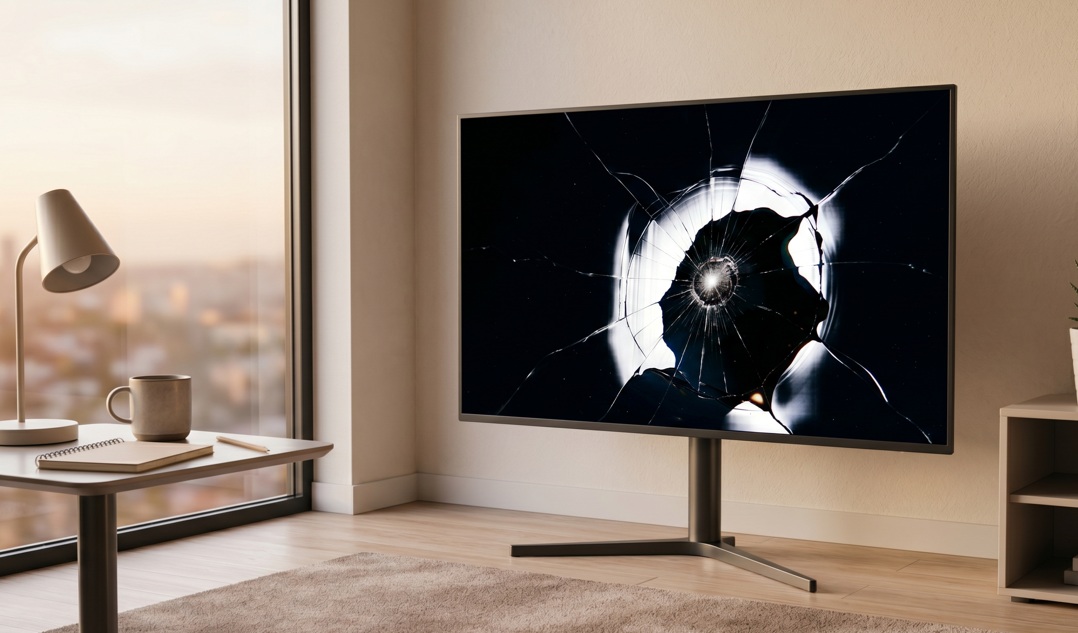
Most cracked TV screens are not worth repairing. A replacement panel typically costs 80–120% of a new TV's price. The exception: very large screens (75"+), OLED TVs, or commercial displays where replacement cost is much higher.
What's in this guide
Damage Assessment Table
You walked in to find the TV cracked — maybe a toy, a falling object, or a mystery. Before you call a repair shop, assess the actual damage.
| Symptom | Likely Damage | Repair Viability |
|---|---|---|
| Black blob / ink spread | LCD/OLED panel cracked | Usually not worth repairing |
| Lines across screen | Panel or T-Con board | T-Con: repairable cheaply. Panel: usually not. |
| Half screen dark | Backlight or T-Con | Sometimes worth diagnosing |
| Physical glass cracked only, display fine | Front glass only | Repairable — much cheaper |
| Whole screen dark, backlight visible | T-Con or panel | T-Con replacement is cheap |
Why TV Screen Repair Is Expensive
The panel is the most expensive component in any TV — typically 70–80% of the manufacturing cost. Replacement panels are sold at near-retail prices because manufacturers don't subsidize them the way they do new TVs. A new 55" LED TV might cost $400 in a sale. The replacement panel alone could cost $350–$500.
This is called the "parts trap" — the economics of TV pricing make replacement more attractive than repair for most screen sizes under 65".
According to Consumer Reports' appliance reliability data, TV repair rates are below 10% for screens under 65 inches due to the unfavorable cost ratio between panels and new TVs[source].
How large is your TV?
First Steps to Take
Step 1: Check your home insurance. Many homeowner and renter insurance policies cover accidental damage to electronics. A $250 deductible might get you full TV replacement at no additional cost. Call your insurer before spending anything on repair.
Step 2: Check if you have an extended warranty. Retailers like Best Buy (Geek Squad Protection), Costco (extended return window), and credit cards sometimes offer extended coverage. Look at your purchase receipt.
Step 3: Look at current TV prices before getting a repair quote. TVs have dropped significantly in price. A 55" TV that cost $600 three years ago might be $350 today. Know the replacement cost before evaluating a repair quote.
According to Tom's Guide's annual TV pricing analysis, average LED TV prices have declined approximately 30–40% over the past three years due to panel manufacturing improvements[source], which makes the repair math even less favorable for smaller screens.
What Not to Do
1. Don't pay for a "diagnosis fee" to confirm a cracked panel. If you can see the crack or ink bleed, you don't need a paid diagnosis to know the panel is damaged.
2. Don't attempt DIY TV panel replacement. TV panels are enormous, delicate, and easy to damage further during handling. This is not a practical DIY repair like a phone screen.
3. Don't throw the TV away before checking for recycling programs. Many manufacturers have take-back programs. Best Buy takes any TV for recycling for a small fee.
4. Don't assume manufacturer warranty covers a cracked screen. Accidental damage is almost universally excluded from standard TV warranties.
When TV Screen Repair Actually Makes Sense
- TV is 75" or larger — replacement panels are relatively cheaper vs. new TV
- TV is an OLED — high-end panels justify repair at the right price
- Commercial or professional display where replacement takes weeks
- Home insurance covers it — then repair cost is irrelevant, just claim it
- Damage is a T-Con board issue (vertical lines, half-screen) — T-Con boards cost $30–$80
TV Crack Decision Flowchart
If You Only Do One Thing
Call your home or renter's insurance company before spending a single dollar on TV repair or replacement. Many policies cover accidental damage to electronics and the call takes five minutes. If you have coverage, you pay your deductible and move on. If you don't, at least you know — and then you can make a proper repair-vs-replace decision without false hope.
People Also Ask
Usually not for TVs under 65 inches — replacement panel costs approach or exceed the price of a new TV. For large screens (75"+) or OLED TVs, repair can sometimes make financial sense.
Panel replacement costs roughly $200–$400 for mid-size TVs (55"), often more than buying a new TV. A 75"+ TV panel may cost $400–$600, which is more justifiable.
It depends on your policy. Many homeowner and renter policies cover accidental damage to personal electronics. Check your policy or call your insurer before assuming either way.
TV screens rarely crack truly on their own. Common hidden causes include pressure during cleaning, objects resting against the screen during transport, or very thin front glass being contacted by something not noticed at the time.