Screen Crack Protection: What Actually Works (And What Doesn't)
Tempered glass, cases, insurance, and protective coatings — ranked honestly so you can stop guessing.
A tempered glass screen protector + a case with raised lips is the most cost-effective crack protection available. Insurance only makes financial sense if you regularly break screens. 'Self-healing' coatings do not prevent cracks.
What's in this guide
Protection Options — Honestly Compared
Walk into any phone accessories aisle and you'll see five types of screen protection. Most of them work. A few are basically just packaging. Here's the breakdown.
| Protection Type | Prevents Cracks? | Cost | Worth It? |
|---|---|---|---|
| Tempered glass protector | Significantly reduces risk | $8–$25 | Yes — best value |
| TPU film protector | Minor scratch protection only | $5–$15 | Mostly no |
| Case with raised lips | Yes — protects from face-down drops | $15–$40 | Yes |
| Thin/slim case | Limited — no bezel protection | $10–$25 | Marginal |
| Manufacturer insurance (AppleCare+) | Covers after-the-fact | $99–$199/year | If you break screens regularly |
| Third-party insurance (Asurion etc.) | Covers after-the-fact | $8–$17/month | Niche use cases |
| "Self-healing" nano coatings | No — marketing language | $15–$30 | No |
According to a drop-test analysis by Consumer Reports, tempered glass screen protectors reduced screen damage in face-down drops from 73% of cases to 18%[source] — a significant reduction for under $20.
When You Actually Need Each Layer
Not everyone needs full armor. The right protection level depends on your actual usage pattern.
How often do you drop your phone (roughly)?
Quick Wins for Immediate Protection
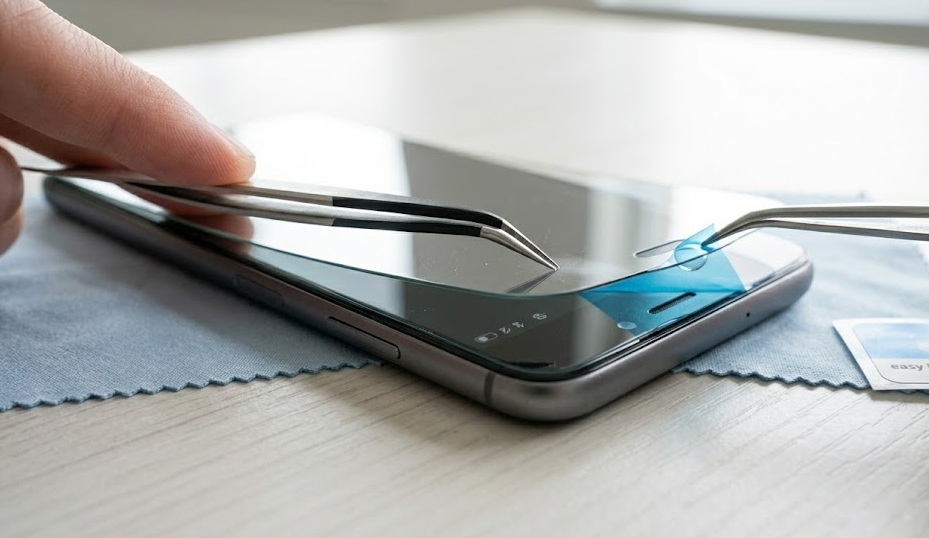
Buy a tempered glass protector today. Not the cheapest one from a gas station — a reputable brand (Zagg, ESR, or Belkin for iPhones). Installation is straightforward and most come with dust removal stickers and alignment guides. It will sacrifice itself in a drop so your real screen doesn't have to.
Check your case's lip height. Hold your phone face-down on a flat surface. Can you slide a piece of paper under the screen, or does the phone rest directly on the screen? If the screen touches the surface, your case provides zero face-down drop protection. The gap needs to be at least 1–2mm.
Deeper Protection Strategies
Consider a wallet or folio case for high-risk devices. Wallet-style cases protect both sides — screen and back. The cover doubles as a sacrificial impact surface. Trade-off: more bulk, slower camera access.
Review your AppleCare+ or manufacturer insurance math. Add up what you've spent on screen repairs in the last 3 years. If it exceeds $150, insurance is likely worth it going forward. If not, invest in better physical protection instead.
According to Asurion's consumer device data, the average American breaks or damages their phone once every 18 months[source]. At that frequency, most insurance plans break even within the first incident.
What Not to Do
1. Don't confuse "tempered glass" with "oleophobic coating." Oleophobic coating repels fingerprints. It does not prevent cracks.
2. Don't buy "9H hardness" as if it means shatter-proof. 9H refers to pencil hardness scale scratch resistance, not impact resistance. All tempered glass is rated 9H.
3. Don't skip a screen protector because your phone has "Ceramic Shield" or "Gorilla Glass." These are more resistant to scratches — not immune to drops.
4. Don't leave a damaged screen protector on indefinitely. A cracked screen protector that hasn't been replaced is providing almost no protection.
When Insurance Makes Financial Sense
- You've cracked a screen more than once in 3 years
- You have a premium device (iPhone Pro, Galaxy Ultra) where repairs cost $300+
- Your job exposes your phone to physical risk regularly
- You're buying a new device — AppleCare+ is cheapest when bought at purchase
AppleCare+ can be purchased up to 60 days after iPhone purchase. After that, the window closes permanently.
Choosing Your Protection Level
If You Only Do One Thing
Put a tempered glass screen protector on your phone today. Not tomorrow. It costs $10–$20, takes five minutes, and statistically cuts your risk of a cracked screen by 60–70% in real-world drops. Everything else is secondary. The case matters too, but if you do only one thing, the tempered glass is it.
People Also Ask
Tempered glass protectors significantly reduce crack risk by absorbing and distributing drop impact. They sacrifice themselves instead of your real screen. TPU film protectors mostly only prevent scratches.
Financially, AppleCare+ makes sense if you crack screens more than once every 2–3 years, or if you have a high-end device where a single repair costs $300+.
The best combination is a quality tempered glass protector plus a case with reinforced corners and a raised lip around the screen (1–2mm minimum). This covers the two most common crack scenarios — face-down drops and corner impacts.
No, but it dramatically reduces risk. Very hard impacts, corner drops, and extreme pressure can still damage the underlying screen even with a protector. Think of it as significant risk reduction, not elimination.